


Crash Course Driving Lessons | Intensive Driving Courses
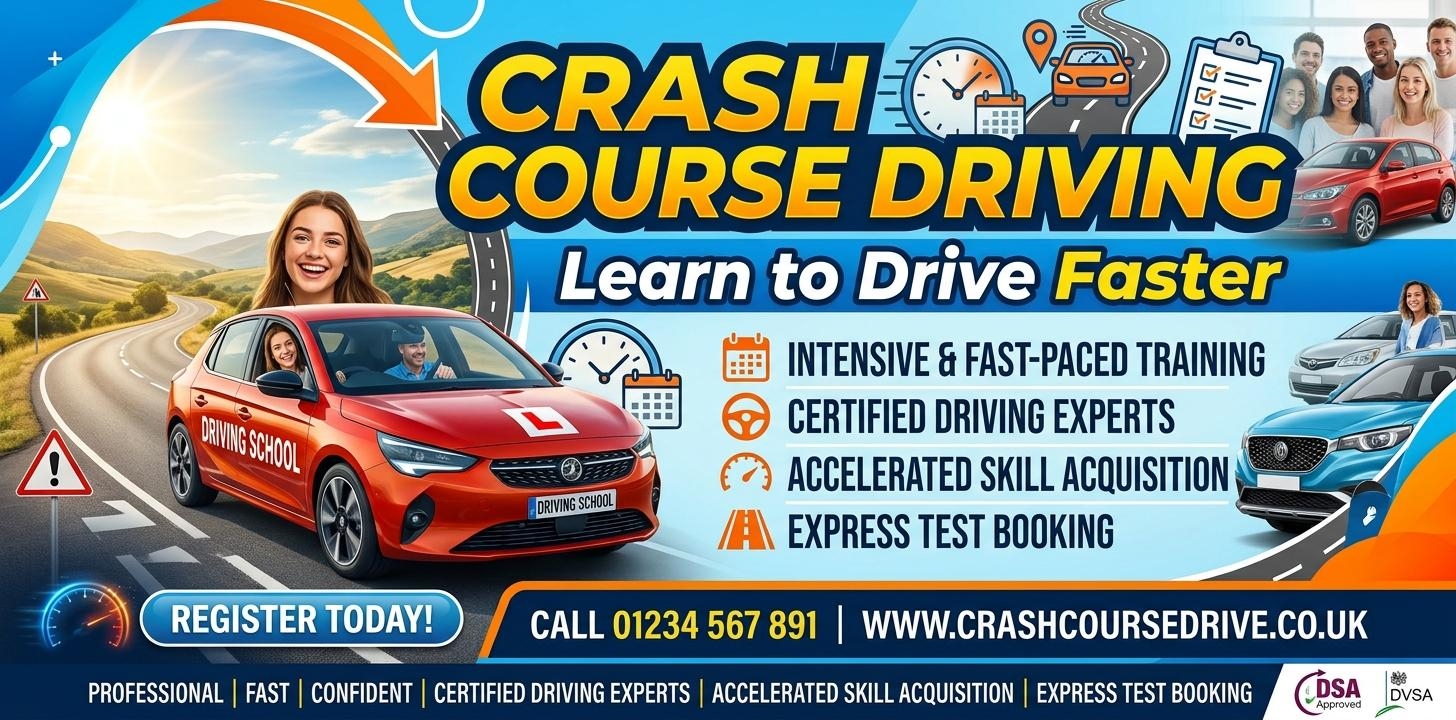
Crash Course Driving Lessons: Learn to Drive With Confidence
Learning to drive can open the door to greater independence, improved mobility, and new personal and professional opportunities. However, not everyone has several months available to complete their driving lessons. Work commitments, education, family responsibilities, or an upcoming driving test may encourage learners to look for a faster way to develop their driving skills. This is where crash course driving lessons can provide a practical solution.
Crash courses are designed to help learners develop their driving abilities within a shorter period through intensive, structured lessons. Instead of spreading tuition across many weeks or months, learners usually attend more frequent sessions over a concentrated timeframe. This approach can help reinforce knowledge, improve consistency, and prepare learners for the practical driving test.
Whether you are a complete beginner, someone who has already taken driving lessons, or a learner preparing to retake a test, choosing the right crash course can help you work towards your driving goals with greater confidence.
What Are Crash Course Driving Lessons?
Crash course driving lessons are intensive driving programmes that allow learners to receive several lessons over a short period. Depending on the driving school's schedule and the learner's experience, a course may take place over a few days, one or two weeks, or another agreed timeframe.
Unlike traditional lessons, which often take place once or twice a week, intensive courses provide more frequent opportunities to practise. This can help learners retain information, become familiar with vehicle controls, and build on previously learned techniques without long gaps between sessions.
The structure of a crash course depends on individual requirements. A beginner may need a more comprehensive programme covering basic vehicle control, road positioning, junctions, and hazard awareness. An experienced learner may benefit from targeted sessions focusing on manoeuvres, roundabouts, independent driving, and test preparation.
The objective is to make learning more concentrated and organised while ensuring that learners develop the skills required to drive safely and independently.
Why Choose Crash Course Driving Lessons?
Crash course driving lessons can be particularly helpful for people who want to make consistent progress within a limited timeframe. By scheduling sessions closer together, learners can build familiarity with driving situations and apply feedback from one lesson to the next.
Learn Within a Shorter Timeframe
One of the main advantages of an intensive driving course is the opportunity to practise frequently. Learners do not always need to wait several days between lessons before revisiting a particular skill.
For example, if you struggle with approaching roundabouts or controlling the vehicle at junctions, your instructor can revisit these areas during subsequent sessions. Repeated practice may help you recognise mistakes more quickly and develop more consistent techniques.
However, completing a course quickly does not automatically mean that you will be ready for the driving test. Progress depends on your starting ability, confidence, concentration, and capacity to learn new skills.
Build Confidence Through Regular Practice
Confidence is an important part of learning to drive. Some learners feel comfortable operating a vehicle but become nervous when encountering busy roads, unfamiliar junctions, or heavy traffic.
Frequent lessons can provide repeated exposure to these situations in a supervised learning environment. As learners become more familiar with different road conditions, they may feel better prepared to make decisions and respond to potential hazards.
A supportive instructor can also help identify the causes of driving anxiety and introduce challenging situations gradually, ensuring that the pace of learning remains manageable.
Prepare for an Upcoming Driving Test
Learners who have already developed basic driving skills may choose a crash course to prepare for an approaching practical test. These programmes can concentrate on areas that need improvement and provide opportunities to practise under realistic test conditions.
Mock driving tests can help learners understand how their performance compares with the required standard. They also provide useful feedback about observation, signalling, road positioning, manoeuvres, and responses to hazards.
This targeted preparation can make the final stages of learning more focused and productive.
Who Can Benefit From an Intensive Driving Course?
Crash course driving lessons can suit people with different levels of driving experience, although the most appropriate programme will depend on their individual needs.
Complete Beginners
Beginners can use an intensive course to learn the fundamentals of driving, including vehicle controls, steering, braking, acceleration, and safe starting and stopping. As their skills improve, they can progress to junctions, roundabouts, parking, and more complex traffic situations.
However, learning everything from scratch within a short period can be demanding. Beginners should choose a course that allows sufficient time for practice, feedback, and rest between sessions.
A responsible instructor will assess progress and recommend additional tuition if the learner needs more time to develop safe driving habits.
Learners With Previous Driving Experience
Learners who have already completed several lessons may find an intensive course particularly useful. They may understand the basic controls but require further practice to improve their consistency and confidence.
An instructor can assess their existing abilities and focus on the areas that need attention. This can include difficult manoeuvres, approaching junctions, dealing with traffic, and maintaining appropriate speed and positioning.
Building on existing knowledge may allow experienced learners to use their lesson time more efficiently.
Learners Who Have Previously Failed a Driving Test
Failing a driving test can be frustrating, particularly when a learner feels prepared. However, a previous unsuccessful attempt can provide useful information about which skills need improvement.
An intensive course can focus on the faults identified during the earlier test and help the learner practise them repeatedly. Mock tests can then be used to assess progress and identify any remaining weaknesses.
The aim should be to address the underlying causes of mistakes rather than simply memorising test routes.
What Will You Learn During Crash Course Driving Lessons?
A comprehensive intensive driving programme should cover the essential skills needed to drive safely and independently. The exact content depends on your experience and the instructor's assessment.
Vehicle Control and Basic Techniques
Early lessons may focus on understanding the vehicle's controls, adjusting mirrors, choosing a suitable seating position, and learning how to steer, accelerate, and brake smoothly.
Learners also practise moving off safely, stopping in appropriate locations, and maintaining control at different speeds. These basic skills provide the foundation for more advanced driving.
Developing consistent vehicle control allows learners to devote more attention to traffic conditions, road signs, and potential hazards.
Junctions, Roundabouts, and Road Positioning
Junctions and roundabouts require careful observation, appropriate speed, correct positioning, and good judgement. Learners must understand when to give way, how to assess traffic gaps, and when it is safe to proceed.
During intensive lessons, instructors can provide repeated opportunities to practise these situations. Feedback helps learners understand when they need to improve their observations, timing, or decision-making.
Road positioning is equally important because it helps drivers communicate their intentions and maintain safe distances from other vehicles, cyclists, and pedestrians.
Parking and Reversing Manoeuvres
Practical driving preparation also includes parking and reversing manoeuvres. Depending on the applicable test requirements, learners may practise parallel parking, reversing into a parking space, or pulling up on the right and reversing.
These exercises require controlled vehicle movement and continuous observation. Instructors can explain how to judge distances, adjust steering, and remain aware of surrounding road users.
Regular practice can help learners perform manoeuvres more confidently while understanding the need to prioritise safety over speed.
Independent Driving and Hazard Awareness
As learners approach test standard, lessons should focus on independent decision-making and responding appropriately to changing road conditions.
Hazard awareness involves identifying potential dangers early and adjusting speed, positioning, or following distance accordingly. Learners also need to follow road signs, interpret traffic signals, and respond safely to instructions.
These abilities are essential not only for passing the practical test but also for becoming a responsible driver after obtaining a licence.
How Long Does a Crash Course Driving Programme Take?
The duration of a crash course depends on the learner's experience, the number of tuition hours required, and the instructor's availability. Some programmes are delivered over several days, while others are spread across one or more weeks.
A beginner generally needs more tuition than someone who has already completed substantial practice. Learners should therefore avoid choosing a course based solely on its advertised duration.
Before booking, discuss your experience with the instructor and ask how the programme will be structured. It is also important to establish whether the schedule includes breaks and whether additional lessons can be arranged if you need more practice.
An effective course should balance intensive learning with enough time to understand feedback, consolidate skills, and maintain concentration.
How Much Do Crash Course Driving Lessons Cost?
The cost of crash course driving lessons varies according to the number of tuition hours, course intensity, vehicle type, location, and instructor availability. Some providers offer fixed-price packages, while others calculate costs according to the hours required.
When comparing options, consider the total price rather than focusing only on the advertised starting rate. Check the lesson duration, payment terms, cancellation policy, and whether practical test fees or additional tuition are included.
You should also ask whether the provider can arrange a practical test within your preferred timeframe. Course availability and test availability are separate matters, and completing an intensive course does not guarantee an immediate test appointment.
Choosing a programme that matches your experience and budget can help you avoid paying for unnecessary lessons or rushing through essential training.
How to Get the Best Results From Your Crash Course
Making the most of intensive lessons requires concentration, preparation, and a willingness to learn from mistakes. Arrive on time, listen carefully to your instructor, and ask for clarification whenever a technique is unclear.
At the end of each session, discuss the skills you performed well and the areas that need more practice. Applying this feedback during the next lesson can help you make steady progress.
It is also important to get sufficient rest, particularly when attending several hours of tuition in one day. Fatigue can affect concentration, learning, and decision-making, so your schedule should remain manageable.
Before attempting the practical test, make sure you can demonstrate safe and consistent driving without relying heavily on instructor prompts. If you still struggle with important skills, additional practice may be more beneficial than rushing to meet a deadline.
Choose the Right Crash Course for Your Needs
The right crash course should provide professional instruction, a realistic timetable, and a learning plan based on your current ability. Check that your instructor is appropriately qualified and authorised to provide paid driving tuition in Great Britain, and confirm that you meet the requirements for learner drivers.
Ask how progress will be assessed and whether the course includes mock tests or targeted practice. Clear communication about costs, availability, and lesson arrangements can also help prevent misunderstandings.
Remember that the purpose of an intensive driving course is not simply to complete a set number of hours. It is to develop the knowledge, judgement, and practical skills needed to drive safely.
With a suitable instructor and a structured learning approach, crash course driving lessons can provide a convenient way to make progress towards your driving goals.
Frequently Asked Questions
Are crash course driving lessons suitable for beginners?
Yes, beginners can take intensive driving lessons if the programme provides sufficient time to develop fundamental skills. The instructor should assess their progress and adjust the schedule according to their learning needs.
How many hours do I need for a crash course?
The number of hours depends on your previous experience, confidence, and driving ability. An instructor can assess your current skills and recommend an appropriate amount of tuition.
Can I pass my driving test after a one-week crash course?
Some experienced learners may become test-ready after an intensive week, but this cannot be guaranteed. Beginners may require more time to develop consistent driving skills and demonstrate the required standard.
Are intensive driving lessons better than weekly lessons?
Both approaches can be effective. Intensive lessons provide frequent practice over a shorter period, while weekly lessons allow more time to reflect on feedback between sessions. The best option depends on your learning style, availability, and experience.
Can I take a crash course after failing my driving test?
Yes. An intensive course can help you focus on the faults identified during your previous test. Your instructor can create a targeted programme to address weaknesses and assess your progress through mock tests.
Do crash courses include the practical driving test?
This depends on the provider. Some courses may offer assistance with test arrangements, while others include tuition only. Always confirm whether the test fee is included and whether a suitable appointment is available.
What should I bring to my first intensive driving lesson?
You should bring your valid provisional driving licence and any other documents requested by your instructor. Wear comfortable footwear suitable for operating the pedals and arrive prepared to discuss your previous experience and learning goals.
Can I choose automatic or manual crash course driving lessons?
Availability depends on the driving school and its instructors. Automatic lessons may be suitable for learners who prefer not to manage manual gear changes, while manual lessons teach you to operate a vehicle with a clutch and manual gearbox. The licence entitlement you obtain will depend on the type of vehicle used for your practical test.
What happens if I need more lessons after completing the course?
If you have not yet reached the required standard, you can discuss additional tuition with your instructor. Extra lessons may help you address remaining weaknesses and improve consistency before taking the practical test.
How do I know whether I am ready for my driving test?
You should be able to drive safely and independently, demonstrate effective observation, manage different road situations, perform required manoeuvres, and respond appropriately to hazards. Your instructor can use mock tests and ongoing assessments to help determine whether you are ready.

