


GNM Nursing Books: Complete Guide for Nursing Students
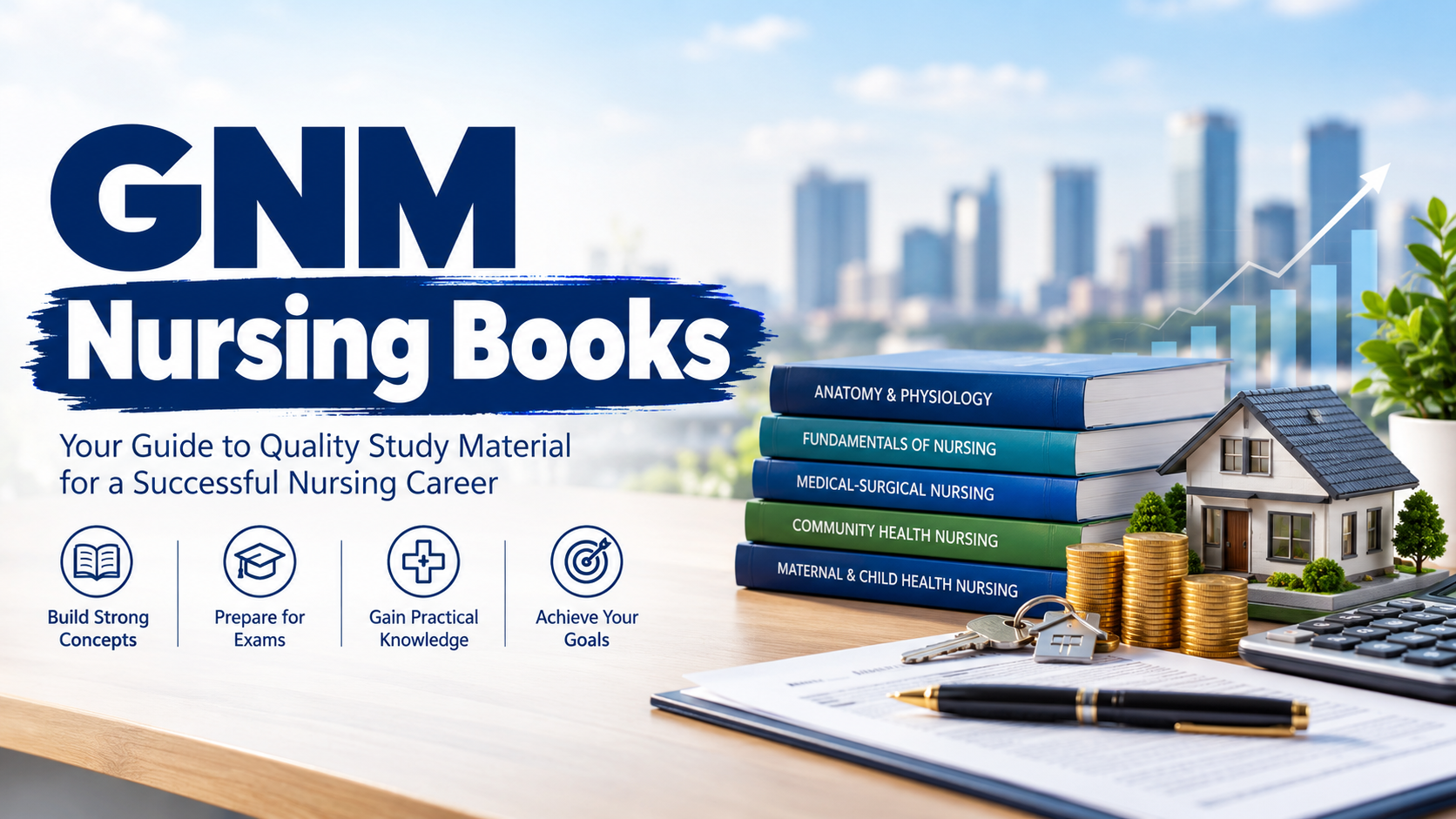
GNM Nursing Books: A Complete Guide for Nursing Students
Introduction to GNM Nursing Books
Choosing the right study material can decide whether your nursing course feels like a struggle or a steady, rewarding journey. If you have just joined the General Nursing and Midwifery programme, finding dependable GNM Nursing Books is probably one of the first things on your list. The right books explain difficult ideas in a simple way, support your classroom lectures, and give you something solid to lean on when exams come closer.
The problem is that there are so many options. Some books are thick and detailed, some are short and exam-focused, and some are outdated. This guide walks you through what the course involves, why books matter so much, which subjects you will study, and how to pick and use study material wisely. Everything is written in plain language, so you can read it once and start applying it right away.
What Is the GNM Nursing Course?
GNM stands for General Nursing and Midwifery. It is a diploma programme that prepares students to work as registered nurses and midwives in hospitals, clinics, community health centres, and many other healthcare settings. The course usually runs for three years of academic study, followed by a period of internship, though the exact structure can vary depending on your state nursing council and institute.
What makes this programme special is its balance. You do not only sit in a classroom. You spend a good part of your time in hospital wards and community settings, learning how to care for real patients. That mix of theory and hands-on practice means your study material has to do two jobs: build your understanding of concepts and prepare you for practical situations.
Because the syllabus is broad, students often feel overwhelmed in the first few months. Good General Nursing and Midwifery books break the syllabus into manageable parts, so you can learn one topic at a time without losing the bigger picture.
Why Are Nursing Books Important for GNM Students?
In the age of videos and online notes, many students ask whether printed books are still necessary. The honest answer is yes, and here is why.
Strong theoretical foundation. Nursing is built on science. Before you can safely give a medicine or monitor a patient, you need to understand how the body works, what goes wrong in disease, and why a particular treatment helps. Textbooks present this knowledge in a structured, step-by-step order that random online notes rarely match.
Support for practical learning. Many books include procedures, checklists, and care plans that match what you do in the ward. When you read about a procedure before performing it, you feel more confident and make fewer mistakes.
Exam preparation. Your final marks depend largely on how well you understand the syllabus and how clearly you can write answers. Books written around the syllabus show you what is important, how topics connect, and how questions are usually framed.
Clear nursing fundamentals. Basics like infection control, patient safety, vital signs, and communication are the backbone of every nursing role. A reliable book helps you revisit these basics whenever you need them, even years after you finish the course.
In short, books give you a trustworthy reference that stays with you from your first day in class to your first day on the job.
Important Subjects Covered in the GNM Nursing Course
The GNM syllabus covers several core subjects. Knowing what each one involves will help you decide which kind of book you need.
Anatomy and Physiology
This is where your nursing knowledge begins. You learn the structure of the human body and how each system works, from the skeletal and muscular systems to the heart, lungs, digestive tract, and nervous system. Diagrams are extremely important here, so choose a book with clear, well-labelled illustrations. Understanding normal body function makes it much easier to recognise what is abnormal later on.
Fundamentals of Nursing
This subject teaches the basic skills every nurse needs. It covers patient hygiene, comfort measures, bed making, infection prevention, vital signs, nutrition, medication administration, and basic communication. Since this is your first real exposure to nursing practice, look for a book that explains procedures in simple steps and links them to the reasoning behind each action.
Medical-Surgical Nursing
Medical-surgical nursing is often the largest and most demanding part of the course. It deals with the care of adult patients with illnesses that need medical treatment or surgery, including heart conditions, respiratory problems, diabetes, kidney disorders, and post-operative care. A good book here explains the disease, its signs and symptoms, the treatment, and the nursing care in a clear, logical order.
Community Health Nursing
Not all nursing happens inside a hospital. Community health nursing focuses on preventing disease and promoting health among families and populations. You study topics such as sanitation, immunisation, nutrition programmes, health education, and national health schemes. Books on this subject should be updated regularly, since programmes and statistics change over time.
Child Health Nursing
Children are not simply small adults, and this subject shows you why. You learn about growth and development, common childhood illnesses, paediatric emergencies, vaccination, and how to communicate with both children and their parents. Look for material that uses charts and tables, because they make milestones and schedules easier to remember.
Mental Health Nursing
This subject introduces you to psychiatric conditions, therapeutic communication, and the nurse's role in supporting patients with emotional and behavioural difficulties. It is as much about attitude and empathy as it is about facts, so books with case examples and simple explanations work best.
Midwifery and Obstetrical Nursing
Midwifery covers care during pregnancy, labour, delivery, and the postnatal period, along with newborn care and family planning. It is a highly practical subject where accuracy matters. Choose a book that clearly explains each stage and includes the signs that need urgent attention.
How to Choose the Right Nursing Books for GNM Students
Walking into a bookshop or browsing online can feel confusing. A few simple checks will save you time and money. If you want a place to start browsing, you can look through a dedicated range of GNM Nursing Books arranged by category and compare what is available against your own needs.
Check the Latest Syllabus
Before buying anything, get a copy of the current syllabus from your institute or nursing council. Match each book to the subjects and units listed there. A book that covers topics you will never be tested on is a waste of effort, and a book that misses key units can leave dangerous gaps in your preparation. Also check the edition, because older editions may contain outdated guidelines or treatment methods.
Choose Easy-to-Understand Study Materials
For most students, simple language matters more than heavy vocabulary. Open a chapter and read a page or two. If you can follow the explanation without reading every line three times, the book is likely a good fit. Look for headings, bullet points, tables, flowcharts, and diagrams that break the content into small, digestible pieces. Different students learn differently, so what works for your classmate may not work for you.
Consider Practical Knowledge and Exam Preparation
The best Nursing Books for GNM Students do not stop at theory. They also include procedures, nursing care plans, and sample questions at the end of chapters. Think about your academic year too. First-year students need strong basics, while final-year students benefit from revision-friendly material and previous-style questions that help with exam practice.
Benefits of Using Quality Nursing Study Materials
Good study material does more than fill your bag. It shapes the way you learn.
- Accuracy you can trust. Reliable textbooks follow accepted medical and nursing standards, which reduces the risk of learning something incorrect.
- Less time wasted. When a book follows your syllabus, you spend your hours studying instead of searching for missing information.
- Better understanding. Clear explanations and diagrams help concepts stay in your memory far longer than rote learning.
- Reference value. Textbooks and reference books become a long-term resource you can return to during internship and even at work.
- Confidence in exams. Practice questions and revision summaries let you test yourself before the real paper, which reduces anxiety.
- Updated knowledge. Healthcare keeps changing. Recent editions reflect new guidelines, drug information, and care practices, so you learn what is relevant today.
It also helps to use more than one kind of resource. A main textbook gives you depth, a reference book clears doubts on tricky topics, and a question bank or short-notes book helps with quick revision. Together, these make up a complete set of GNM nursing study materials.
Tips for Preparing for GNM Nursing Examinations
Having the right books is only half the story. How you use them matters just as much. Here are some practical habits that many successful students follow.
Create a Daily Study Schedule
Consistency beats last-minute cramming every time. Set aside fixed hours each day for study, and divide your time between subjects according to difficulty. Keep tougher subjects like medical-surgical nursing for the time of day when you feel most alert. Break the syllabus into weekly targets so you always know whether you are on track. Short, focused sessions of 45 to 60 minutes with small breaks usually work better than studying for hours without a pause.
Make Short Notes and Revise Regularly
While reading a chapter, jot down key points in your own words. Use simple tools such as headings, abbreviations, flowcharts, and colour marking to make your notes quick to scan. These short notes become your best friend during the final weeks before exams. Revise them regularly, ideally once a week, rather than waiting until the last moment. Repeating information at spaced intervals helps it move into long-term memory.
Practice Important Questions
Solving questions trains your brain to recall information under pressure. Go through previous question patterns, attempt chapter-end questions, and practise writing full answers within a time limit. This builds both speed and clarity. Writing answers with proper headings, short points, and neat diagrams also helps you score better, since examiners appreciate well-organised responses.
Focus on Both Theory and Practical Knowledge
Nursing exams test more than memory. Alongside written papers, you will face practical assessments where you must perform procedures correctly. Whenever you read about a skill, try to connect it with what you have seen or done in the ward. Practise procedures step by step with your classmates or in the skills lab, and keep revising the reasoning behind each step. This habit makes you a safer and more confident nurse, not just a better exam candidate.
Common Mistakes to Avoid When Choosing Nursing Books
Even careful students sometimes make avoidable errors. Keep these in mind:
- Buying without checking the syllabus. A popular book is not always the right book for your course.
- Using outdated editions. Old information can cost you marks and, worse, affect patient care later on.
- Choosing by thickness or price alone. A heavy book is not automatically better, and a cheap one may skip essential topics.
- Relying only on guides and short notes. These are useful for revision, but they cannot replace a proper textbook.
- Buying too many books at once. Too many resources create confusion. Start with the essentials and add reference material only when you need it.
- Ignoring teacher and senior advice. Your faculty and seniors know which books match your exam pattern, so ask them before you spend your money.
Where to Find Suitable GNM Nursing Study Materials
You can find nursing books through college libraries, local bookstores, and online stores. Libraries are great for borrowing expensive reference books you only need occasionally. Local shops let you flip through pages before buying. Online platforms save time and often offer a wider choice, especially if you live far from a large bookstore.
If you prefer to explore everything in one place, a focused collection of GNM Nursing Books makes it easier to compare subjects and find material that suits your year and syllabus. Whichever source you choose, always confirm the edition, check that the content matches your course, and read the description carefully before placing an order.
Frequently Asked Questions About GNM Nursing Books
Which books are useful for GNM nursing students?
Students generally need one good textbook for each core subject: anatomy and physiology, fundamentals of nursing, medical-surgical nursing, community health nursing, child health nursing, mental health nursing, and midwifery. Along with these, a few reference books and a practice question book can strengthen your preparation.
How should students choose nursing books according to their syllabus?
Start by collecting the official syllabus from your institute or nursing council. Compare the unit list with the contents page of each book. If most units are covered clearly and the edition is recent, it is a safe choice. Your teachers can also guide you toward books that suit your exam pattern.
Are reference books helpful for GNM examination preparation?
Yes, they are very helpful, especially for clearing doubts and understanding difficult topics in more depth. However, they should support your main textbooks rather than replace them. Use them selectively when a topic is unclear.
How can students prepare effectively using nursing books?
Follow a regular study plan, read each chapter with the syllabus in hand, make short notes, and revise weekly. Practise questions often, and always link what you read with what you observe in clinical practice. Consistent effort over months works far better than intense study in the last few days.
Conclusion
Your nursing books are more than study tools. They are companions that guide you through three demanding but rewarding years and continue to help you as a working professional. By checking your syllabus, choosing clear and updated material, and building smart study habits, you give yourself the best chance of success in your exams and in your career. If you are ready to start building your study collection, explore the available range of GNM Nursing Books and pick the ones that fit your course, your learning style, and your goals. Stay consistent, stay curious, and remember that every chapter you finish brings you one step closer to becoming a confident, caring nurse.

