


Nursing Books for BSC, GNM and ANM Students: A Complete Guide
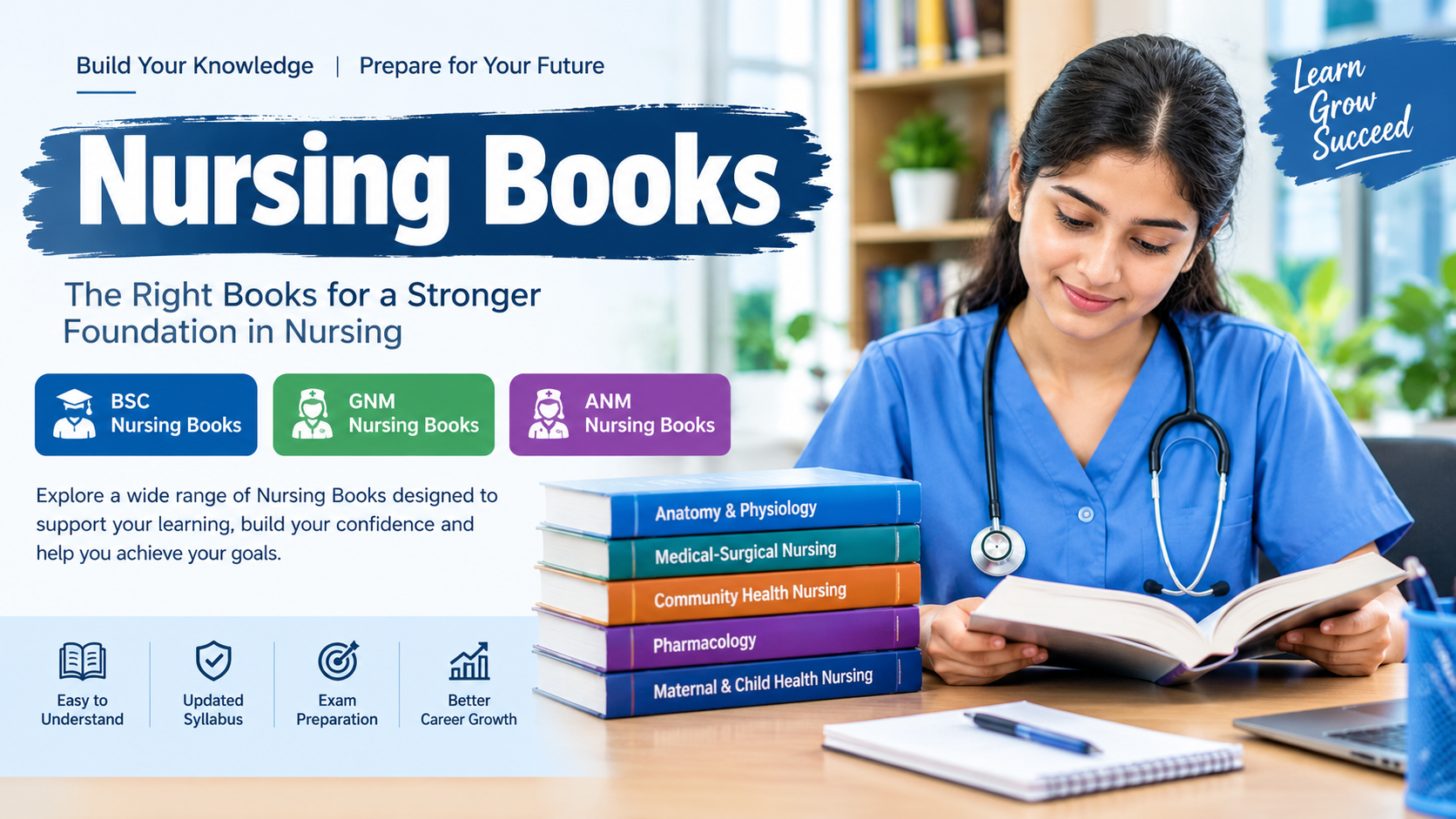
Nursing Books for BSC, GNM, and ANM Nursing Students
Every nursing student eventually realizes that classroom lectures alone are not enough. Good Nursing Books give you a reliable place to return to when a concept feels unclear, when exams approach, or when you want to understand a procedure before practicing it in the ward. They explain subjects in a structured way, follow the course pattern, and let you learn at your own pace.
Nursing is a field where knowledge directly affects patient care. That is why the quality and suitability of your study materials matter so much. This guide covers how books support nursing education at the BSC, GNM and ANM levels, which subjects each course covers, how to choose the right materials, and how to study more effectively.
Understanding the Importance of Nursing Study Materials
Nursing education combines theory, practical skills and professional behavior. Students must learn how the human body works, how diseases develop, how medicines act, and how to communicate with patients and families. No single lecture or demonstration can cover all of this. Well-organized study materials fill the gaps and let students revisit difficult topics as many times as needed.
Study materials also shape examination preparation. Nursing exams test both understanding and the ability to apply knowledge to real situations. A student who has read the prescribed topics carefully is better placed to answer both short and long questions with confidence. Beyond exams, the habits built through regular reading support lifelong professional development, because healthcare practice keeps changing and nurses must keep learning.
How the Right Books Support Nursing Education
Textbooks introduce medical terminology in a clear and consistent way. Terms that sound complicated in the first semester become familiar when you meet them repeatedly in context, with definitions, diagrams and examples. This helps students follow clinical discussions and write accurate answers.
Books also describe nursing procedures step by step. Whether it is hand hygiene, vital signs measurement, medication administration or wound care, a written explanation helps you understand the reasoning behind each step. Knowing why a step is performed makes you safer and more confident when you practice under supervision. Patient care principles such as dignity, consent, comfort and safety are also explained in detail, which helps students develop the right attitude toward care.
Building Strong Fundamentals in Nursing
Strong fundamentals make every later subject easier. Anatomy and physiology form the base, since you cannot understand disease or treatment without knowing how a healthy body functions. Basic concepts like infection control, nutrition, hygiene, communication and observation of patients appear again and again across the course.
Students who invest time in these early topics often find advanced subjects less overwhelming. For example, understanding the cardiovascular system makes it much easier to learn about hypertension, cardiac medicines and related nursing care. Start with the basics, make sure they are clear, and then move to complex topics.
Developing Effective Study Habits
Good study habits turn good books into real learning. Begin by dividing your syllabus into small units and assigning each unit a specific number of days. A weekly reading schedule that includes time for revision works better than last-minute cramming.
Make short notes while you read. Writing key points, definitions, drug classifications and steps of procedures in your own words helps memory far more than simply highlighting text. Review these notes regularly, and mark topics that need extra attention. Over time, your notes become a compact revision guide.
Making Learning More Consistent
Consistency matters more than long, irregular study sessions. Reading for one or two focused hours every day builds understanding gradually and reduces exam stress. Regular revision helps information move into long-term memory, so you recall it more easily in the exam hall and in the clinical area. Students who study steadily usually feel more academic confidence, because they know what they have covered and what still needs work.
BSC Nursing Books for Undergraduate Nursing Students
The Bachelor of Science in Nursing is a degree program that covers a wide range of subjects across several years. It combines classroom learning, laboratory work and clinical postings, so students need materials that explain concepts thoroughly and also support practical learning. Choosing suitable Nursing Books for each year of the program helps you stay organized and prepared, instead of searching for scattered notes before every exam.
BSC Nursing Books should match the depth of the degree course. They typically offer detailed explanations, case examples, diagrams and review questions. Students often use one main textbook per subject and add a reference book or practical guide where needed.
Important Subjects Covered in BSC Nursing
The BSC Nursing curriculum includes several core subjects. Here are the major ones:
- Anatomy and Physiology: Structure and function of the human body systems.
- Fundamentals of Nursing: Basic nursing procedures, patient needs, safety and communication.
- Medical-Surgical Nursing: Care of adults with medical and surgical conditions.
- Microbiology: Microorganisms, infection, immunity and prevention.
- Pharmacology: Drug actions, uses, side effects and safe administration.
- Community Health Nursing: Public health, family health, prevention and health promotion.
- Mental Health Nursing: Understanding mental disorders and caring for patients with psychological needs.
- Child Health Nursing: Growth, development and care of infants and children.
- Obstetrics and Gynecological Nursing: Pregnancy, childbirth, postnatal care and women’s health.
Each subject builds on others. Pharmacology, for instance, relies on physiology and microbiology, while medical-surgical nursing draws on almost everything you have learned before.
Choosing Books According to the BSC Nursing Syllabus
The most important rule is to follow your university syllabus. Different universities and nursing councils may organize topics differently, and the same subject can be taught with different emphasis. A book that suits one syllabus may include extra material or miss important topics for another.
Before buying, compare the book’s table of contents with your syllabus unit by unit. Check whether the edition reflects the current curriculum, and ask your teachers or seniors which books they recommend. This small effort can save both money and study time.
Books for Theory and Practical Learning
Theory books explain the concepts, but nursing is a practical profession, so practical learning needs equal attention. Procedure manuals and clinical guides list the steps, equipment and precautions for common nursing skills. These are especially useful before laboratory sessions and clinical postings.
Reference books add further detail when a textbook explanation feels brief. A dictionary of medical terms, a drug reference or an anatomy atlas can clarify doubts quickly. Using theory, practical and reference materials together gives a more complete understanding than relying on one type alone.
Tips for Preparing for BSC Nursing Examinations
Start by reviewing the syllabus and identifying high-weightage topics from previous question patterns. Create a revision timetable that rotates subjects so that no subject is left until the final week. Practice writing answers within time limits, since time management is a common challenge in long-answer questions.
Use previous question papers and review questions at the end of chapters to test yourself. Revise your short notes and diagrams in the last few days instead of starting new topics. Finally, get adequate sleep and rest before the examination, because a calm mind recalls better.
GNM Nursing Books for General Nursing and Midwifery Students
General Nursing and Midwifery is a diploma course that prepares students to provide direct patient care in hospitals and community settings. The course is practical in nature, so study materials should be simple, clear and focused on application. GNM Nursing Books help students understand patient needs, nursing procedures and the principles of safe care, and they support both classroom learning and clinical training.
Because GNM students spend considerable time in clinical settings, they benefit from materials that connect theory to what they see in the ward. Clear language and well-labeled illustrations make a real difference here.
Essential Subjects for GNM Nursing Students
GNM students study a combination of foundational and clinical subjects, including:
- Fundamentals of Nursing: Basic care, hygiene, vital signs and nursing procedures.
- Medical-Surgical Nursing: Care of patients with common medical and surgical conditions.
- Community Health Nursing: Health education, prevention and care in community settings.
- Mental Health Nursing: Basic principles of caring for patients with mental health conditions.
- Child Health Nursing: Care of newborns, infants and children.
- Midwifery and Obstetrical Nursing: Antenatal, intranatal and postnatal care.
- Nutrition and First Aid: Dietary needs, common nutritional problems and emergency care.
These subjects prepare students for roles in hospitals, clinics and community health programs.
Selecting Books for Theory and Clinical Practice
The GNM course runs in stages, and the learning needs change from year to year. In the early stage, students need books that explain basic concepts and fundamental procedures in simple language. In later stages, they need materials covering specialized clinical areas such as midwifery, pediatrics and community health.
Choose textbooks that match your current stage and syllabus. Pair them with practical guides that describe procedures clearly, so you can prepare before demonstrations and return demonstrations. Ask your instructors which materials align best with your institution’s teaching plan.
Improving Clinical Knowledge Through Reading
Reading before and after clinical duty improves what you learn on the ward. Before a posting, read about the common conditions and procedures you are likely to see. Afterward, read again to confirm what you observed and to clear any doubts.
Good textbooks explain patient assessment, nursing procedures, infection prevention and safe care practices in an organized way. For example, reading about hand hygiene, safe handling of equipment and waste disposal helps you understand why these routines are so important. This reading supports, but never replaces, supervised practice under qualified staff.
Study Tips for GNM Nursing Students
Set small weekly targets, such as finishing one chapter and revising the previous one. Prepare brief notes on procedures, listing the purpose, equipment, steps and precautions. Use flow charts or tables for topics with many points, such as nutritional deficiencies or stages of labor.
Practice questions help you recognize exam patterns. Discuss difficult topics with classmates or teachers, because explaining a concept aloud is a strong way to test your understanding.
ANM Nursing Books for Auxiliary Nursing and Midwifery Students
Auxiliary Nursing and Midwifery training prepares students to work closely with communities, especially in primary healthcare and maternal and child health services. The course focuses on practical, field-oriented knowledge. ANM Nursing Books should therefore be easy to follow, well illustrated and closely aligned with community health needs.
Since many ANM students work in rural and community settings after training, the learning materials should build confidence in basic care, health education and referral awareness.
Important Subjects Covered in ANM Nursing
The ANM course covers topics such as:
- Community Health Nursing
- Primary Healthcare
- Maternal Health
- Child Health
- Nutrition
- First Aid
- Basic Nursing Care
- Health Education
- Midwifery Fundamentals
These subjects help students support families through preventive care, health promotion and early recognition of health problems.
Choosing ANM Books According to Course Requirements
Start with your syllabus and academic level. ANM courses can differ in structure depending on the state or institution, so check which topics are included in each year. Pick books that cover those topics fully and use language you can understand without difficulty.
Examination requirements matter too. If your exams emphasize short answers, objective questions or practical assessments, choose materials that include suitable review questions and clear summaries. Ask teachers or senior students for suggestions before buying.
Understanding Maternal and Child Healthcare
Maternal and child healthcare is one of the most important parts of ANM training. Educational resources explain antenatal care, safe delivery practices, postnatal care and newborn care in a structured way. They also cover child growth and development, immunization awareness, breastfeeding and common childhood illnesses.
Learning these topics thoroughly helps students recognize warning signs and understand when to seek further medical support. Clear diagrams and simple charts, such as growth charts and immunization schedules, make these topics easier to remember.
Preparing for ANM Examinations Effectively
Prepare a study plan that gives extra time to the heavier subjects, such as midwifery and community health. Revise important topics repeatedly instead of reading everything once. Practice questions from earlier papers and chapter reviews to improve speed and accuracy.
Keep your notes short and clear, with headings for quick revision. Spend the last days before the exam on revision, not on new topics, and take care of your health and sleep.
How to Choose the Best Nursing Study Materials
With so many options available, choosing the right materials can feel confusing. A few simple checks will help you decide wisely. The sections below explain what to look for.
Check the Latest Syllabus and Curriculum
The syllabus is your starting point. Books should match the course you are enrolled in and cover the topics required for your examinations. Curricula are revised from time to time, so make sure the material reflects the version currently applicable to you. A book that follows an older pattern may include outdated topics or leave out new ones.
Look for Clear Explanations and Accurate Information
Nursing is a field where accuracy is essential. Choose materials written in clear, simple language, with correct medical information and relevant examples. Illustrations, tables and flow charts make complex ideas easier to understand. When you browse a collection of Nursing Books, read a few pages of a chapter you find difficult. If the explanation feels clear and logical, the book probably suits your learning style.
Consider Practical Guides and Reference Books
Core textbooks form the base of your preparation, but practical manuals and reference books add depth. Practical guides help you understand procedures before demonstrations, while references such as medical dictionaries, drug handbooks and anatomy atlases help with quick checking. You do not need every reference book, so choose only those that genuinely support your course.
Compare Editions and Subject Coverage
Before buying, check the publication details and edition. Newer editions often include updated information, revised guidelines and improved illustrations. Compare the subject coverage with your syllabus and confirm that the book covers what you need without too much extra material. A careful comparison saves both money and time.
Benefits of Using the Right Nursing Books
Suitable study materials bring several educational benefits:
- Better understanding of nursing concepts: Clear explanations make complex topics easier to follow.
- Improved examination preparation: Organized content and review questions support systematic revision.
- Stronger theoretical foundations: Solid basics help you learn advanced subjects with less difficulty.
- Better preparation for clinical learning: Reading about procedures and patient care before practice builds readiness.
- More organized revision: Structured chapters and summaries make it simple to plan revision.
- Increased confidence in academic work: Knowing your material well reduces anxiety.
It is important to remember that books support learning but do not replace supervised clinical training or professional guidance. Skills such as patient handling, injections and emergency response must be learned and practiced under qualified instructors. Think of textbooks as a strong partner to your teachers and clinical supervisors, not a substitute for them.
Tips for Studying Nursing Subjects More Effectively
Good study methods multiply the benefit of every book you own. Consider these practical recommendations:
- Create a realistic study timetable: Plan according to your class schedule, clinical duties and rest time, so you can actually follow it.
- Set daily learning goals: Small goals, like finishing one topic, keep you motivated and on track.
- Make short and organized notes: Write key points, definitions and steps in your own words.
- Revise difficult topics regularly: Return to challenging chapters more often until they feel familiar.
- Practice examination questions: Solve earlier papers and review questions to improve speed and accuracy.
- Use diagrams and tables where helpful: Visual summaries make comparisons and processes easier to remember.
- Connect theory with supervised clinical learning: Relate what you read to what you observe in the ward.
- Take breaks and maintain a consistent routine: Short breaks and regular sleep keep your mind fresh.
No single method suits everyone, so try different approaches and keep the ones that work. The aim is steady understanding rather than memorizing text without meaning.
Common Mistakes to Avoid When Selecting Nursing Books
Even careful students make avoidable mistakes when choosing study materials. Being aware of them helps you decide better.
- Choosing books without checking the syllabus. A popular book may not match your course requirements.
- Relying on outdated editions. Older editions may miss updated information or revised curriculum content.
- Buying unnecessary reference materials. Too many books can distract you and increase costs without improving learning.
- Ignoring practical manuals. Skipping practical guides can leave gaps in your clinical preparation.
- Studying from unreliable sources. Unverified notes or poorly prepared summaries may contain errors, which is risky in a field like nursing.
If you are unsure, ask your teachers, clinical instructors or senior students for guidance before making a purchase.
Frequently Asked Questions About Nursing Books
Which books are useful for BSC Nursing students?
The right books depend on the subject, academic year, university syllabus and applicable curriculum. Most students need a core textbook for each subject, such as anatomy, fundamentals of nursing, pharmacology and medical-surgical nursing, along with practical guides and a few references. Check your syllabus first, and confirm choices with your teachers.
Which subjects should GNM Nursing students study?
GNM students study fundamentals of nursing, medical-surgical nursing, community health nursing, mental health nursing, child health nursing, midwifery and obstetrical nursing, and nutrition and first aid. The course combines theory with clinical practice, so students learn both the concepts and the hands-on skills of patient care.
How can students select suitable ANM Nursing Books?
Begin with syllabus alignment and confirm that the book covers all required topics. Look for clear explanations, helpful illustrations and current editions. Choose materials that suit your academic level and exam pattern, and ask instructors for recommendations if you are unsure.
Are nursing reference books useful for examination preparation?
Yes, reference books can supplement prescribed textbooks by giving extra detail, alternate explanations and quick checks on terms or drugs. They should not replace your main course materials, though. Use them to clarify doubts after studying the core textbook.
Should nursing students buy new editions of textbooks?
Updated editions can be useful when curricula, clinical guidance or examination requirements change. If your syllabus has been revised, a newer edition may match it better. If the older edition still fits your syllabus fully, discuss with your teachers before deciding.
How can students prepare a nursing examination study plan?
Divide the syllabus into manageable units and assign time to each, with extra days for difficult subjects. Schedule regular revision sessions and practice questions every week. Follow a syllabus-based approach, and keep the final days for revision rather than new topics.
Conclusion
Choosing the right study materials is one of the most practical steps a nursing student can take toward academic success and clinical readiness. Good Nursing Books explain concepts clearly, support examination preparation and build the knowledge that safe patient care depends on. BSC Nursing Books, GNM Nursing Books and ANM Nursing Books each serve a different level of training, so matching them to your course is essential.
Check your syllabus, compare editions, balance textbooks with practical guides, and keep a steady study routine. Remember that books work best alongside supervised clinical training and the guidance of your teachers. Choose materials that fit your course requirements and learning goals, and you will build strong, lasting confidence as a future nurse.

