


How Does Sunshine CMH Sodium Light Support Plant Growth Stages
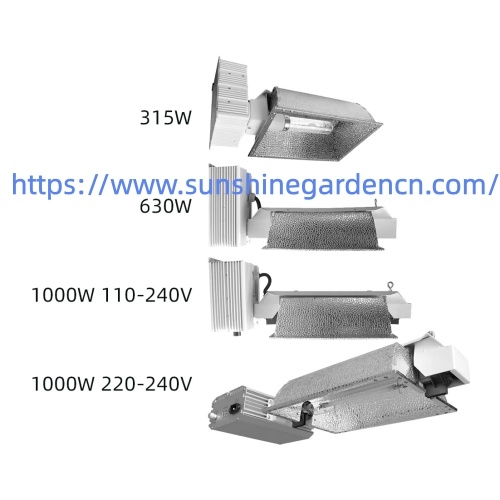
CMH Sodium Light spectrum plays an important role in indoor cultivation because plants respond differently to various wavelengths as they develop. From the emergence of young leaves to the formation of flowers and fruit, each stage involves changing requirements for energy, structure, and environmental stability. Understanding these differences helps growers make informed decisions about equipment selection, fixture placement, and daily cultivation schedules. Rather than treating illumination as a fixed setting, growers can consider how spectral distribution works alongside temperature, humidity, irrigation, and nutrient management.
The seedling stage is a sensitive period in the growing cycle. Newly emerged plants have small leaves, developing roots, and limited energy reserves. Their growing environment should provide consistent conditions without exposing delicate tissues to excessive intensity. Blue wavelengths are associated with compact growth, leaf development, and the regulation of stem elongation. A suitable spectral distribution can support the establishment of healthy plant structures when combined with appropriate watering and temperature control.
Growers should pay attention to the distance between fixtures and the plant canopy. Equipment installed too close may create unnecessary heat or excessive intensity, while an unsuitable arrangement can produce uneven coverage. Measuring photosynthetic photon flux density, commonly known as PPFD, offers a more useful way to evaluate the energy reaching plants than relying on wattage alone. This measurement also helps growers make gradual adjustments as seedlings become established.
Once plants enter the vegetative stage, their requirements begin to change. Leaves expand, stems develop, and root systems become more established. During this period, plants need sufficient energy to support photosynthesis and produce new tissues. Blue, green, and red wavelengths each contribute to different aspects of plant development.
Blue wavelengths influence leaf shape and stem development, while red wavelengths participate in photosynthetic activity and developmental responses. Green wavelengths can also penetrate deeper into the canopy, helping illuminate leaves that receive less direct exposure. A broad spectral distribution therefore provides growers with a flexible approach to managing different plant structures.
Canopy management becomes increasingly important as foliage expands. Lower leaves may receive less energy when upper branches become crowded. Adjusting plant spacing, pruning practices, and fixture positioning can help distribute exposure more evenly. Growers should also monitor temperature and airflow because increasing plant density can change the conditions around the canopy.
Flowering and fruit production introduce another set of cultivation considerations. Plants begin allocating more resources toward reproductive development, and environmental consistency becomes increasingly important. Red wavelengths play a role in flowering responses, while the overall spectral composition influences photosynthesis and plant morphology.
However, changing the spectrum alone does not determine flowering performance. Photoperiod, plant genetics, nutrient availability, irrigation, and temperature all contribute to the development process. Different crops also respond differently to the same cultivation conditions. Growers should therefore follow crop-specific guidance instead of applying one schedule to every variety.
During this period, maintaining even canopy coverage can help reduce differences between plants in different positions. Regular observation allows growers to identify stretching, uneven development, or signs of environmental stress. Adjustments should be introduced gradually so that plants have time to respond to changing conditions.
Selecting suitable horticultural equipment requires attention to several practical factors. Spectral distribution is important, but it should not be considered separately from electrical consumption, heat generation, operating life, and installation requirements.
Growers can begin by checking the manufacturer specifications. Relevant information includes rated power, spectral distribution charts, photosynthetic photon output, recommended mounting distance, and operating temperature. These details help buyers understand whether a particular fixture matches their growing area and crop requirements.
Heat management deserves particular attention when using traditional high-intensity discharge equipment. Ballast compatibility, reflector design, ventilation, and available ceiling height can all influence installation decisions. A well-planned arrangement makes routine maintenance easier and helps maintain more consistent environmental conditions.
It is also useful to consider the intended growing cycle before purchasing equipment. A small propagation room may have different requirements from a commercial greenhouse or a dedicated indoor cultivation facility. Buyers should evaluate coverage area and crop density rather than selecting a product based only on its electrical rating.
Successful cultivation depends on the relationship between equipment and the surrounding environment. Even a carefully selected spectral configuration cannot compensate for poor irrigation, insufficient ventilation, or unsuitable nutrient management.
A practical monitoring routine can help growers identify changes before they develop into larger problems. Recording temperature, humidity, PPFD, watering frequency, and plant appearance provides useful information for evaluating cultivation conditions. Comparing these records across different growth stages also helps growers make adjustments based on actual observations.
Equipment maintenance should form part of this routine. Dust accumulation, aging components, electrical connections, and reflector condition can influence operating performance. Regular inspections help maintain consistent output and identify components that may require attention.
For commercial growers, purchasing decisions also involve supply continuity and product specifications. Consistent manufacturing standards, clear technical documentation, and communication with suppliers can simplify equipment planning, especially when several cultivation areas need similar configurations.
Every growing project has its own requirements, from small indoor planting spaces to larger controlled-environment facilities. Understanding spectral characteristics and plant development patterns allows buyers to evaluate equipment according to their intended applications rather than relying on general assumptions. Sunshine focuses on horticultural equipment solutions for growers who value practical product specifications and application-based selection. When planning a new installation or updating an existing cultivation system, buyers can review the available product range, compare relevant configurations, and consider their space, crop type, and operating requirements. Visit the Sunshine product catalogue at https://www.sunshinegardencn.com/product/ to explore available options and identify equipment suited to different indoor growing projects.

