


How Variable Data Printing Makes Direct Mail More Personal
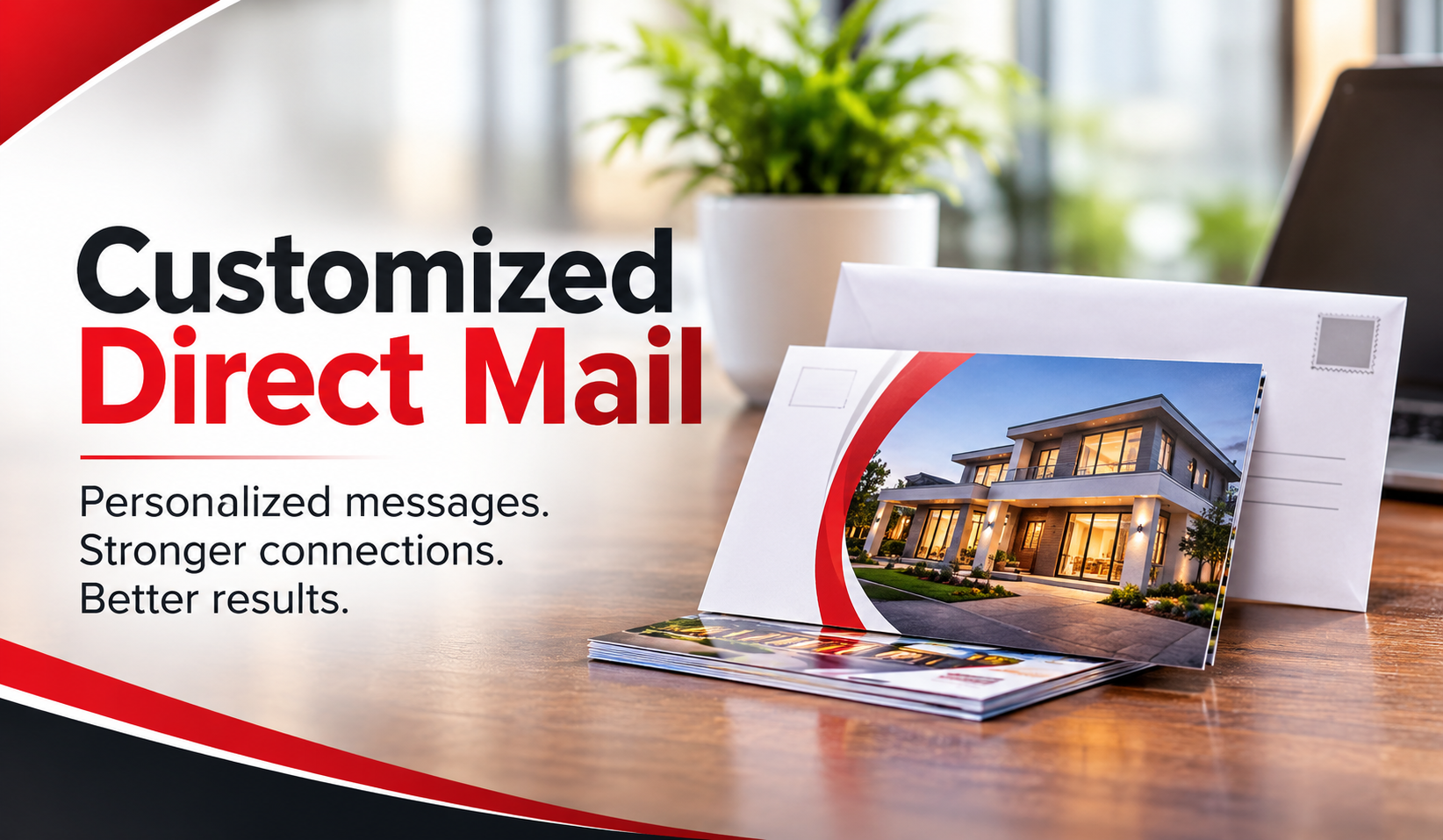
Business owners put considerable effort into creating direct mail campaigns, yet many still struggle to make their messages feel relevant to individual customers. They choose attractive designs, prepare mailing lists, and invest in printing, only to send identical postcards or letters to people with very different needs. When every recipient receives the same offer, even a professionally designed mail piece can struggle to capture attention.
We see this challenge frequently in direct mail planning. A homeowner searching for maintenance services has different priorities than someone who recently moved into a new neighborhood. Similarly, a loyal customer may respond to a personalized appreciation offer, while a first-time prospect needs a clear introduction to the business. Treating these audiences alike often limits the value of a mailing campaign.
This is where variable data printing makes a practical difference. It allows businesses to adjust names, offers, images, and other details within individual printed pieces without creating a separate printing project for every customer. When businesses combine this technology with Customized Direct Mail, they can create communications that feel more relevant while maintaining an efficient production process.
What Is Variable Data Printing in Direct Mail Marketing?
Variable data printing, often called VDP, is a digital printing technique that changes specific elements from one printed piece to the next using information from a database. Businesses can personalize postcards, letters, brochures, and other marketing materials while maintaining a consistent overall design. Instead of printing thousands of identical messages, they can create different versions that reflect individual customer information or audience segments.
For example, a local service company might send one postcard design to several neighborhoods while adjusting the recipient's name, nearest location, and service offer. The layout remains consistent, but the message changes according to the information the company provides. This approach helps businesses communicate with different customers without managing numerous separate print runs.
How Variable Data Printing Works
The process begins with an organized customer database. Businesses provide information such as names, mailing addresses, customer categories, purchase history, or geographic locations. A printing provider then connects the relevant data fields to designated areas within the printed design.
During production, digital printing equipment uses those fields to generate personalized versions of each mail piece. One recipient might see a welcome offer, while another receives a loyalty message based on previous purchases. The production process handles these variations without requiring businesses to redesign every individual piece.
We recommend reviewing the mailing database before starting production. Inconsistent names, outdated addresses, and incomplete customer information can cause embarrassing personalization errors. A clean database gives businesses a stronger foundation for accurate, relevant communication.
What Elements Can Businesses Personalize?
Variable data printing offers more flexibility than simply placing a customer's name at the beginning of a letter. Businesses can adjust different parts of their marketing materials according to the campaign's purpose and available customer information. The key is to choose details that genuinely help recipients understand the message.
Common personalization options include:
-
Customer names and mailing addresses
-
Location-specific offers and promotions
-
Product recommendations based on previous purchases
-
Personalized greetings and introductory messages
-
Images that match different customer segments
-
Unique discount codes or promotional details
-
QR codes that connect recipients with relevant landing pages
-
Contact details for nearby branches or service locations
Not every campaign needs all these features. We generally recommend choosing a few meaningful variables instead of filling the mail piece with unnecessary personalized details. A clear message with one relevant offer usually provides a better starting point than a complicated design with too many changing elements.
Why Personalized Direct Mail Matters for Customer Relationships
Customers encounter advertising through email, social media, search engines, and traditional mail. With so many businesses competing for attention, generic messages can become easy to overlook. Personalized direct mail gives businesses an opportunity to communicate more specifically with the people they want to reach.
However, personalization only creates value when the message matches the recipient's circumstances. Adding someone's name to an irrelevant promotion rarely makes the offer useful. Businesses need to connect customer information with a clear reason for making contact.
Personalized Messages Feel More Relevant
Consider a home improvement company that sends the same kitchen remodeling postcard to every household. Some recipients may have recently renovated their kitchens, while others might currently need bathroom repairs. Although the company reaches a large audience, the message does not account for these different interests.
Variable data printing allows the company to develop more relevant messaging for customer groups with known service interests. A customer who previously requested bathroom renovation information could receive a corresponding offer, while another group receives details about kitchen remodeling.
This approach does not guarantee a response, but it helps businesses make better use of the customer information they already possess. Relevance gives recipients a clearer reason to read the message and consider the offer.
Personalization Supports Ongoing Customer Communication
Direct mail does not always need to encourage an immediate purchase. Businesses can also use personalized messages to maintain contact with existing customers, acknowledge important milestones, and introduce services that match previous interests.
We encourage businesses to think beyond one-time promotional postcards. A thoughtful anniversary message, a customer appreciation letter, or a relevant service reminder can support a relationship over time. These communications show customers that the business understands their history rather than treating every interaction as a new sales opportunity.
How Variable Data Printing Improves Direct Mail Campaign Targeting
Successful direct mail campaigns begin with a clear understanding of the intended audience. Businesses sometimes focus heavily on postcard size, paper quality, and printing costs while giving limited attention to mailing list accuracy. Yet even an attractive mail piece can struggle when it reaches the wrong household.
Variable data printing works best when businesses combine reliable audience information with purposeful segmentation. Rather than separating customers into countless categories, we recommend identifying a few differences that directly influence what people need or expect.
Target Customers Based on Location
Location-based personalization works particularly well for businesses that serve specific neighborhoods, cities, or service areas. Restaurants, healthcare practices, landscaping companies, and home service providers can adjust their messaging according to where recipients live.
For instance, a business with multiple branches can highlight the nearest location, while a seasonal maintenance company can adjust its messaging to match local conditions. These details help customers understand whether the offer applies to them.
Businesses should verify location data carefully and avoid making assumptions about individual households. Geographic information can guide relevant communication, but it cannot reveal every customer's needs.
Create Different Offers for New and Existing Customers
First-time prospects and returning customers often need different messages. A prospective customer may want to understand a company's services, pricing approach, and reasons to choose it. An existing customer may already trust the business and simply need a relevant reason to return.
Variable data printing allows businesses to create distinct offers for these groups within a coordinated mailing campaign. New customers might receive an introductory promotion, while previous customers receive a service reminder or appreciation incentive.
We recommend keeping the offers easy to understand. When a postcard contains several competing discounts, customers may struggle to identify the intended action. One clear offer with straightforward terms generally makes the message easier to evaluate.
Reach New Homeowners With Timely Information
New homeowners often make purchasing decisions related to cleaning, repairs, landscaping, security, and other household services. Businesses that serve these needs can use appropriately sourced mailing data to introduce themselves during a period when recipients may be exploring local providers.
A personalized welcome postcard could include a neighborhood-specific message, a relevant service introduction, and a simple contact option. Businesses planning these campaigns can also explore practical approaches to reaching new homeowners before competing businesses establish contact.
Timing matters, but message quality matters just as much. New residents may receive multiple advertisements shortly after moving, so businesses should emphasize helpful information rather than relying on aggressive promotional language.
Practical Ways Businesses Can Use Variable Data Printing
Variable data printing supports several types of direct mail campaigns. The best application depends on the business model, customer relationships, and available data. We usually recommend starting with a specific business objective before choosing personalization features.
Personalized Postcards for Local Businesses
Postcards offer a straightforward format for communicating promotions, announcements, and service information. Their limited space encourages businesses to focus on a single message, which makes them particularly suitable for targeted local campaigns.
A dental practice might introduce services to nearby households using location-specific information. A home cleaning company could promote seasonal appointments to customers within its service area. Each business can maintain its visual identity while adjusting the offer or message for different audience segments.
We recommend keeping the headline readable and placing the most useful information where recipients can quickly find it. Personalization should strengthen the core message rather than compete with it.
Customer Loyalty and Appreciation Mailers
Existing customers provide businesses with opportunities for more meaningful communication because the relationship already has a history. When appropriate customer records exist, businesses can personalize messages around previous purchases, membership milestones, or service anniversaries.
A retail business might send a returning customer a relevant category offer. A salon could acknowledge a client anniversary with a personal message, while a local service provider might thank customers for their continued support.
The message should feel natural and respectful. Businesses should avoid referencing sensitive or unexpectedly detailed customer information simply because their database contains it. Thoughtful personalization builds on a relationship without making recipients uncomfortable.
Appointment Reminders and Service Follow-Ups
Some direct mail campaigns focus on helping customers take practical action rather than promoting a new product. Appointment reminders, maintenance notices, and service follow-ups can provide useful information while keeping the business visible.
For example, an automotive service provider might send a maintenance reminder based on accurate service records. A home services company could follow up after completing a project and explain when customers may want to consider future maintenance.
We advise businesses to verify dates, customer records, and service details before printing. A reminder with incorrect information can damage confidence more quickly than a generic message.
How to Plan an Effective Variable Data Direct Mail Campaign
Personalized printing offers flexibility, but a successful campaign still requires careful planning. Businesses need to coordinate their objectives, mailing lists, creative materials, and production schedules. Skipping these steps often creates additional expenses or unnecessary revisions.
Define One Clear Campaign Objective
Before designing a mail piece, identify the action the business wants recipients to take. That action might involve booking an appointment, visiting a store, requesting an estimate, or returning for another purchase.
A clear objective helps determine the mailing audience, offer, and call-to-action. When businesses try to achieve several unrelated goals through one postcard, the message can become confusing.
We recommend writing the campaign objective in one sentence during the planning stage. This simple exercise makes it easier to evaluate whether each personalization feature supports the desired outcome.
Clean and Segment the Mailing List
The quality of the mailing database directly affects personalization accuracy. Duplicate entries, outdated contact details, missing names, and incorrect address formatting can create wasted mail pieces and awkward customer experiences.
Businesses should remove unnecessary duplicates, standardize customer information, and review the accuracy of available records. They should also consider applicable privacy obligations and avoid using customer details in ways recipients would not reasonably expect.
Once the database is ready, divide the audience into meaningful groups. A small number of well-defined segments often gives businesses enough flexibility to create relevant messages without making the campaign difficult to manage.
Match the Design to the Personalized Message
A common mistake involves creating a finished design before deciding which elements need to change. This can cause problems when longer names, different offers, or variable images no longer fit the original layout.
We recommend planning flexible spaces for personalized content from the beginning. Designers should consider the longest expected names, alternative headlines, image dimensions, and how different text lengths affect spacing.
Typography also deserves attention. A clear font, sufficient contrast, and comfortable reading size help recipients understand the message regardless of which personalized version they receive.
Review Samples Before Printing
Proofing becomes especially important when a campaign contains multiple personalized fields. A sample may look correct for one customer while another version contains awkward spacing, missing information, or an incorrect image.
Businesses should review samples from different customer segments and examine records with unusually long names or incomplete fields. They should also confirm that the correct offers match the intended audiences.
We encourage teams to review both the visual appearance and the underlying data rules. A postcard can look professional while delivering the wrong promotion to the wrong customer.
Common Variable Data Printing Mistakes Businesses Should Avoid
Personalization can improve direct mail relevance, but poor execution can undermine the message. Many preventable problems begin before printing, particularly when businesses rush database preparation or add personalization without a clear purpose.
Using Personal Information Without a Clear Reason
Not every available customer detail belongs in a marketing message. Businesses sometimes assume that more personalized information automatically creates stronger communication.
In practice, excessive personalization can feel intrusive. Customers may question how a business obtained certain information, especially when the details have little connection to the offer.
We recommend using information that customers would reasonably expect the business to know and that directly improves the message. Personalization should make communication helpful, not uncomfortable.
Sending Too Many Different Offers
Businesses sometimes create numerous audience segments because their printing technology allows them to do so. However, more variations mean more content to review, more rules to verify, and more opportunities for mistakes.
A manageable campaign might include three or four carefully developed message variations rather than dozens of minor changes. Each version should serve a clear customer need or business objective.
Starting with fewer variations also makes campaign analysis easier. Businesses can identify which messages perform well before investing in more detailed personalization.
Ignoring Print Quality and Mailing Preparation
A personalized message still needs professional presentation. Poor image quality, crowded layouts, unclear printing, or incorrect address placement can weaken the recipient's impression.
We advise businesses to review paper selection, postcard dimensions, color consistency, and mailing requirements alongside personalization. These decisions influence the finished piece and can affect production costs.
Coordinating printing and mailing early also helps prevent avoidable delays. A carefully designed campaign loses some of its value when production problems cause it to arrive after the intended promotional period.
Is Variable Data Printing Worth the Cost?
Business owners naturally want to understand whether personalized printing justifies the additional planning and data preparation. The answer depends on campaign size, production requirements, customer data quality, and the results the business hopes to achieve.
Variable data printing may require more setup than a basic static mailing. However, it can also reduce the need to produce separate print jobs for different customer groups. Businesses should evaluate the total campaign expense rather than focusing only on the cost of printing each piece.
Compare Personalization Costs With Campaign Goals
A business mailing several hundred postcards may have different priorities than one reaching thousands of customers across multiple locations. The appropriate level of personalization changes according to the campaign's scope and available budget.
We recommend requesting estimates that account for database preparation, variable design setup, printing, and mailing services. This provides a clearer picture of total expenses and helps businesses compare available approaches.
Measure Results Instead of Assuming Success
Personalized mail should support measurable business objectives. Businesses can use unique promotional codes, dedicated phone numbers, campaign-specific landing pages, or QR codes to understand how recipients respond.
Tracking methods should match the campaign's purpose. A retailer may focus on offer redemptions, while a service provider may track appointment inquiries or estimate requests. Businesses should also consider the revenue or value that those responses generate.
When possible, we recommend comparing a personalized mailing with a similar non-personalized version. Keeping the audience, timing, and offer reasonably consistent can help businesses understand whether personalization contributes meaningful improvements.
How to Choose the Right Variable Data Printing Service
Choosing a printing provider involves more than comparing equipment capabilities or postcard prices. Businesses need a partner that understands how customer data, design, production, and mailing preparation work together.
A provider should explain how it handles variable fields, reviews sample records, and checks personalized content before production. Clear communication during these stages helps businesses identify potential problems before they affect the final mailing.
Ask About Data Preparation and Proofing
Businesses should understand which file formats the provider accepts and how the team verifies data compatibility. They should also ask whether the proofing process includes multiple personalized examples rather than one generic design.
We consider this especially important for campaigns involving several customer segments. Reviewing a representative selection of records can reveal problems that a standard print proof might miss.
Look for Practical Direct Mail Experience
A provider with direct mail experience can help businesses consider production schedules, mailing specifications, paper choices, and address placement. These practical details influence how efficiently a campaign moves from planning to delivery.
We recommend discussing campaign objectives before selecting printing specifications. A dependable process connects the marketing strategy with the physical mail piece instead of treating printing as a separate final step.
Frequently Asked Questions About Variable Data Printing
1. What is the difference between variable data printing and traditional printing?
Traditional printing generally produces identical copies of a design, while variable data printing changes selected content from one piece to another. Businesses can personalize names, offers, images, and other information using customer data. This makes VDP particularly useful for direct mail campaigns that target different customer groups.
2. Can small businesses use variable data printing for direct mail?
Yes. Small businesses can use variable data printing for postcards, customer reminders, promotional letters, and local marketing campaigns. They do not necessarily need an extensive customer database to begin. A clean mailing list and a few meaningful audience segments can provide a practical starting point.
3. Does personalized direct mail always improve response rates?
No. Personalization alone cannot guarantee better campaign results. Mailing list accuracy, offer relevance, message clarity, timing, and design all influence how customers respond. Businesses should track results and compare different approaches rather than assuming that adding personal details will automatically improve performance.
4. What information do businesses need for variable data printing?
Businesses typically need an organized mailing list containing recipient names, addresses, and any additional information they want to use for personalization. Depending on the campaign, this might include customer categories, locations, or relevant purchase history. Accurate data and clear personalization rules help reduce printing errors and improve message relevance.
Conclusion
Variable data printing gives businesses a practical way to make direct mail more relevant to individual customers. By adjusting names, offers, locations, and messaging, companies can create printed communications that reflect different customer needs without producing an entirely separate campaign for every audience.
However, effective personalization requires more than printing technology. Accurate mailing lists, thoughtful segmentation, professional design, and careful proofing all contribute to the finished result. Businesses also need clear campaign objectives and reliable tracking methods to understand whether their investment supports meaningful outcomes.
At MailProsUSA, we understand the importance of connecting direct mail planning with practical printing and mailing decisions. Businesses considering variable data printing can begin by reviewing their customer information, identifying relevant audience groups, and choosing a focused message. A conversation about the campaign's goals and production requirements can help determine the most suitable approach before printing begins.

