


Manufacturing Methods for Industrial Rack Components
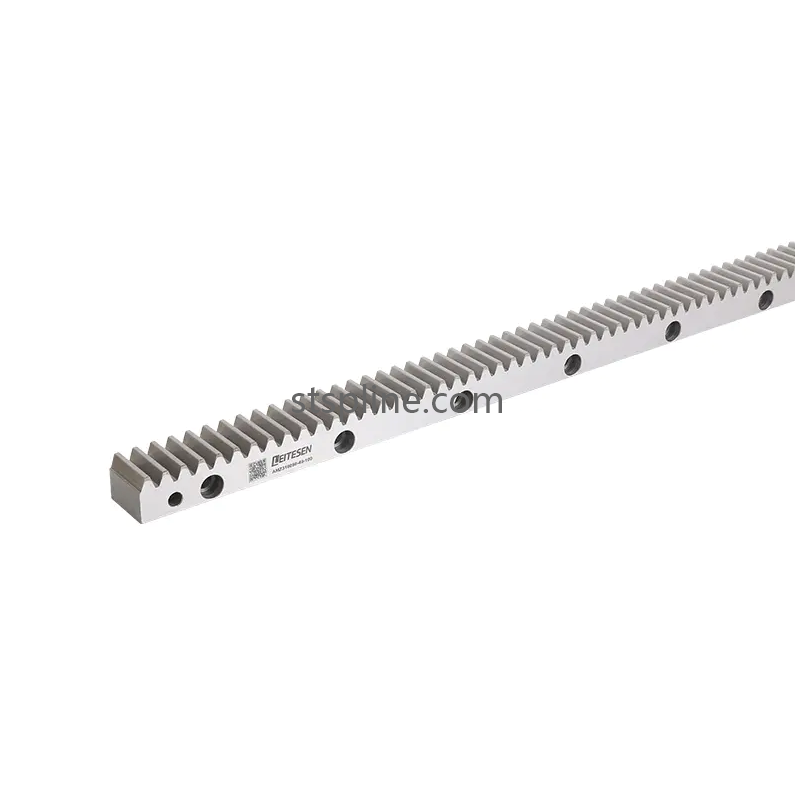
Gear racks are important mechanical components in equipment that converts rotational power into linear movement. Their toothed profiles engage with pinion gears to transmit motion along a straight path, supporting applications in CNC machinery, automated production equipment, laser cutting systems, and industrial handling devices. The manufacturing method used to produce the teeth influences dimensional consistency, engagement quality, and the suitability of the finished component for its intended application. Milled Rack products are manufactured through machining processes that shape the tooth profile and other critical features according to specific technical requirements.
Milling is a material removal process in which a rotating cutting tool removes material from a workpiece to create the required geometry. In gear rack production, suitable milling methods can be used to form tooth spaces, machine reference surfaces, and produce mounting features. The machining process is selected according to the rack design, material, production volume, and required accuracy. Different rack configurations may require different tooling arrangements and production sequences, so process planning is an important part of manufacturing.
Tooth geometry is one of the most important features of a gear rack. The tooth profile must correspond to the mating pinion to achieve suitable engagement during operation. Module, pressure angle, tooth spacing, and profile consistency all contribute to the relationship between the two components. If the tooth geometry deviates from the drawing requirements, the rack may not engage evenly with the pinion. This can affect movement smoothness, backlash, noise, and wear behavior. Careful machining and inspection help maintain the intended gear geometry.
Material selection should be established before the machining process is finalized. Carbon steel is frequently used in industrial rack production because it offers practical machinability and suitable mechanical properties for many applications. Alloy steel may be selected when different strength or heat-treatment characteristics are required. The material affects cutting conditions, tool selection, machining efficiency, and finishing requirements. Manufacturers should therefore consider material properties and product specifications together when planning production.
The manufacturing sequence may include raw material preparation, surface machining, tooth milling, drilling, heat treatment, grinding, and final inspection. Not every rack requires every process. For example, some applications may need additional surface hardening to improve resistance to contact wear, while others may prioritize dimensional consistency and straightforward finishing. Heat treatment can influence component dimensions, so subsequent inspection and finishing may be necessary to confirm that the finished product meets the specified requirements.
Machining accuracy is not limited to the tooth profile. Overall straightness, rack length, cross-sectional dimensions, mounting-hole positions, and reference surfaces can all influence installation and operation. These features are particularly important when multiple rack sections are connected along an extended machine axis. Dimensional deviations between sections may complicate assembly and affect the continuity of the movement path. Manufacturers should define suitable inspection points according to the technical drawing and the component's intended function.
Surface quality also deserves attention. The machined surfaces should be appropriate for their contact and mounting functions. Tooth surfaces interact with the pinion during operation, while mounting surfaces provide the reference for installation. Burr removal, edge finishing, and appropriate surface treatment help prepare the component for assembly. Depending on the working environment, corrosion protection may also be considered. These finishing operations should support the product's intended use without changing critical dimensions beyond acceptable limits.
Milled gear racks are used in a variety of industrial motion systems. CNC routers and machining centers incorporate rack drives for linear axis movement. Laser cutting machines use gear transmission components in gantry structures. Automated handling equipment may rely on rack-based mechanisms to move materials between stations. Industrial robots, packaging machinery, and assembly systems can also use machined racks when a mechanical drive is required for controlled linear travel.
In practical machine design, the rack works together with a pinion, motor, reducer, guide rails, bearings, and control components. The rack and pinion transmit mechanical force, while the guide system supports the moving structure and maintains its direction. The motor and controller manage the movement commands. Compatibility among these components influences the overall operation of the machine. When selecting a rack, buyers should consider the complete drive arrangement, including mounting conditions, travel distance, expected loading, and maintenance requirements.
Quality inspection helps verify the consistency of the finished product. Depending on the design, inspection may cover dimensions, tooth profile, tooth spacing, straightness, surface condition, and mounting features. Measuring equipment and inspection procedures should be appropriate for the required tolerances. For repeat production, consistent process control helps reduce variation between batches and supports equipment manufacturers that need replacement parts or recurring orders.
For procurement teams, supplier evaluation should include machining experience, production equipment, technical drawing interpretation, material control, and quality management. The ability to manufacture according to customer drawings or samples can be useful for customized machinery projects. Buyers should provide clear information about the application and installation arrangement so that the manufacturer can review the design before production. Good technical communication helps prevent errors related to tooth specifications, mounting dimensions, and component compatibility.
As industrial automation expands, machined gear components continue to support reliable mechanical movement in different types of equipment. Milled Rack manufacturing combines material preparation, controlled tooth machining, finishing, and inspection to produce components suited to specific transmission requirements. By considering the full production process and working with an experienced manufacturer, equipment builders can select gear racks that fit their machine designs and operating conditions. Learn more about SOTER's gear rack manufacturing at https://www.stspline.com/

