


Burner Management System Market Trends: Shaping the Future of Combustion Safety
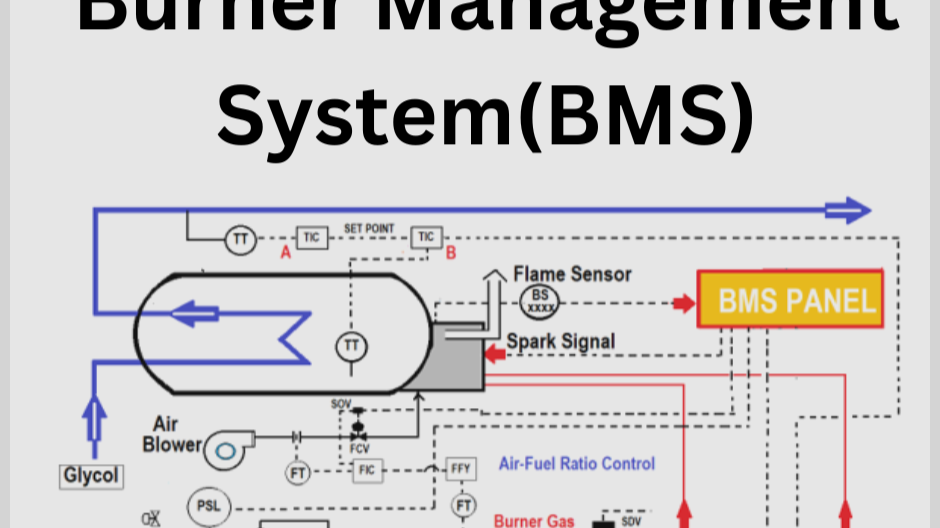
From Digitalization to Hydrogen-Ready Systems
The technology that safeguards industrial combustion is evolving rapidly, driven by the imperatives of digital transformation, the energy transition, and the relentless pursuit of operational excellence. The Burner Management System Market Trends report highlights the key developments that are reshaping this critical safety sector, from the integration of advanced analytics to the fundamental redesign of systems for alternative fuels. This article delves into the most significant trends currently defining the burner management system market, offering insights into how these shifts are changing the way industrial operators manage combustion safety.
One of the most significant overarching trends is the digitalization of the BMS. The traditional view of a BMS as a standalone, hardwired safety system is being replaced by a vision of a connected, intelligent asset. This digital transformation is being driven by the Industrial Internet of Things (IIoT), which allows BMS components—flame scanners, valve positioners, controllers—to communicate their health and status to central monitoring systems. This enables a shift from reactive maintenance (fixing a component after it fails) to predictive maintenance (addressing an issue before it causes a shutdown). The digitalization trend also encompasses the use of digital twins—virtual replicas of the BMS and the combustion process—for design validation, operator training, and scenario analysis, significantly reducing commissioning time and improving operational safety.
Key Growth Drivers: Hydrogen Economy and Functional Safety
Two powerful drivers are shaping the trends in this market. The first is the emergence of the hydrogen economy. As industries and governments commit to decarbonization, hydrogen is being positioned as a key clean fuel. However, hydrogen has significantly different combustion properties than natural gas—it burns faster, has a wider flammability range, and produces a nearly invisible flame. This requires a new generation of BMS with specialized flame scanners, faster safety logic, and advanced control algorithms. The trend toward "hydrogen-ready" BMS is accelerating, with vendors developing systems that can safely handle blends of hydrogen and natural gas today, with a pathway to 100% hydrogen in the future. The second driver is the continued evolution of functional safety standards. The application of IEC 61508 and IEC 61511, and the requirement for SIL (Safety Integrity Level) ratings, is becoming more stringent and widespread. This is driving the trend toward using certified safety PLCs over general-purpose PLCs or relays, and toward more rigorous validation and testing protocols.
Consumer Behavior and E-Commerce Influence
Consumer behavior, particularly the growing awareness of environmental issues, is influencing market trends. The modern consumer’s preference for products and services with a lower environmental footprint is putting pressure on industrial companies to reduce their emissions and improve their sustainability reporting. This has accelerated the trend toward BMS solutions that optimize combustion efficiency and enable the use of lower-carbon fuels. Furthermore, the e-commerce-driven demand for fast delivery has heightened the focus on supply chain resilience. This has led industrial operators to invest in BMS solutions that offer higher availability and faster diagnostics to minimize the risk of unplanned shutdowns that could disrupt the supply of essential goods. The result is a trend toward more robust, digitally connected, and remotely manageable BMS.
Regional Insights and Preferences
Trends in the burner management system market often originate or are adopted differently across regions. In North America, the dominant trend is the modernization of aging infrastructure through retrofits. There is a strong focus on replacing obsolete relay-based systems with modern safety PLC-based solutions, often with an IIoT-enabled layer for remote monitoring. In Europe, the dominant trends are driven by the energy transition and functional safety. There is a strong focus on BMS solutions that can handle hydrogen and other alternative fuels, as well as a rigorous application of SIL standards. European end-users are also at the forefront of adopting digital twin technology for BMS. In the Asia-Pacific region, the trend is toward standardization and the adoption of global safety standards in rapidly growing industrial sectors. There is also a strong trend toward the use of locally manufactured, cost-effective BMS for smaller facilities, while large greenfield projects tend to adopt the latest integrated solutions from global vendors.
Technological Innovations and Emerging Trends
Beyond digitalization and hydrogen readiness, several other technological innovations are emerging as significant trends. The development of advanced flame scanners is a key area. Modern scanners use digital signal processing, video imaging, and even artificial intelligence to provide more reliable flame detection, even in challenging conditions like multiple burners, variable fuel quality, or high-turbulence environments. Another trend is the use of wireless communication for BMS components. While safety-critical loops still require hardwiring, wireless sensors for non-safety diagnostics and monitoring are gaining traction, enabling easier retrofits and providing more data for predictive maintenance. The integration of cybersecurity features directly into the BMS is also a critical trend, as connected safety systems become potential targets for cyberattacks. This includes the use of hardened controllers, encrypted communications, and strict access controls. Additionally, the trend toward modular, pre-engineered BMS solutions is growing, particularly for smaller or standardized applications, as they reduce engineering time and project costs.
Sustainability and Eco-Friendly Practices
Sustainability is not just a driver but a defining trend in its own right. The trend toward BMS systems that actively manage and report on emissions is becoming mainstream. These systems not only ensure safe combustion but also provide real-time data on fuel consumption and emissions, helping operators meet regulatory reporting requirements and internal sustainability goals. The trend toward "energy management" BMS, which integrates safety with combustion optimization, is accelerating. This trend is also reflected in the development of BMS for waste-to-energy plants and biomass boilers, which are becoming increasingly important as part of the circular economy. Furthermore, vendors themselves are adopting sustainable practices, such as designing BMS hardware for longer lifecycles and easier recyclability, aligning with the broader sustainability trends in the industrial sector.
Challenges, Competition, and Risks
While the trends point toward a more advanced and capable BMS, they also introduce new challenges and risks. The transition to hydrogen-ready BMS requires significant R&D investment and a deep understanding of new combustion science, which can be a challenge for smaller vendors. The increasing digitalization and connectivity of BMS introduce new cybersecurity vulnerabilities, requiring continuous investment in security measures. The complexity of integrating modern BMS with aging legacy equipment can be a significant technical challenge, particularly in retrofit projects. There is also a risk that the rapid pace of technological change could lead to skills shortages, as the workforce may not have the necessary expertise in both combustion safety and digital technologies. Furthermore, the high cost of cutting-edge BMS solutions can be a barrier for smaller facilities, potentially creating a two-tier market.
Future Outlook and Investment Opportunities
The future outlook for market trends points toward a continued acceleration of digitalization, the widespread adoption of hydrogen-ready systems, and the integration of AI-driven analytics for predictive safety and maintenance. The concept of the "self-optimizing" BMS, which uses AI to continuously adjust parameters for optimal safety, efficiency, and emissions performance, is on the horizon. Investment opportunities are significant in companies that are leading the development of hydrogen combustion safety solutions. There is also strong potential in the development of AI-powered analytics platforms that can leverage BMS data to provide insights beyond the BMS itself, into overall plant performance. Companies that can offer integrated solutions that combine BMS with combustion control, emissions monitoring, and cybersecurity will be well-positioned to capitalize on the convergence of these trends.
Conclusion
The trends shaping the burner management system market reflect a fundamental transformation of industrial safety. The move toward digital, connected, and intelligent systems, combined with the imperative to enable the use of low-carbon fuels, is redefining what a BMS is and what it can do. As these trends continue to evolve, the BMS will transition from a critical safety device to a strategic asset that helps industrial operators navigate the complex landscape of safety, efficiency, and sustainability.
➤➤Explore Market Research Future- Related Ongoing Coverage In Semiconductor Industry:

